Fashion brands are prioritising and incorporating aspects of disruption into their existing business narratives, as a means of appealing to the Generation Z demographic and distinguishing from their competitors (Francis, P71). The definition of ‘material wealth’, as previously defined by sociologist Erving Goffman, has in recent years shifted in this landscape of digital marketing: the utilisation of status symbols, Goffman discusses, were previously used to signify one’s ownership of a plethora of highly priced, quality goods (Goffman, P24).
Fashion is by itself, as sociologist Georg Simmel describes in 'The Philosophy of Fashion', a process shrouded by imitating via means of achieving ‘social adaptability’. This includes the process of ‘leading the individual onto the path’ of the masses, while satisfying a need for being distinctive, differentiating ourselves through ‘change in contents’ (p338-344). While the pillars of luxury definition (Miller) still apply, they have taken a new context of social, cultural currency and of optimal distinctiveness.
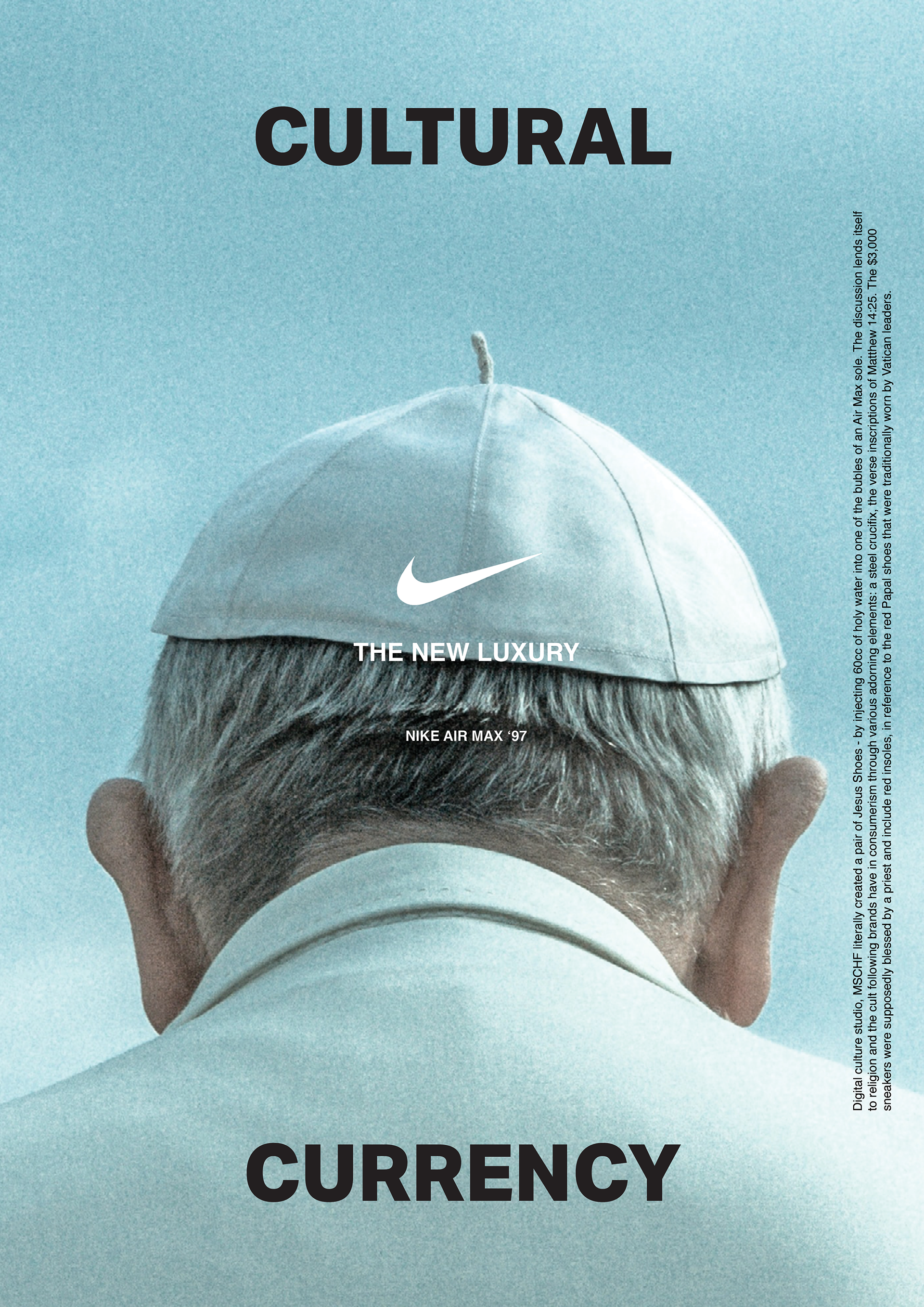
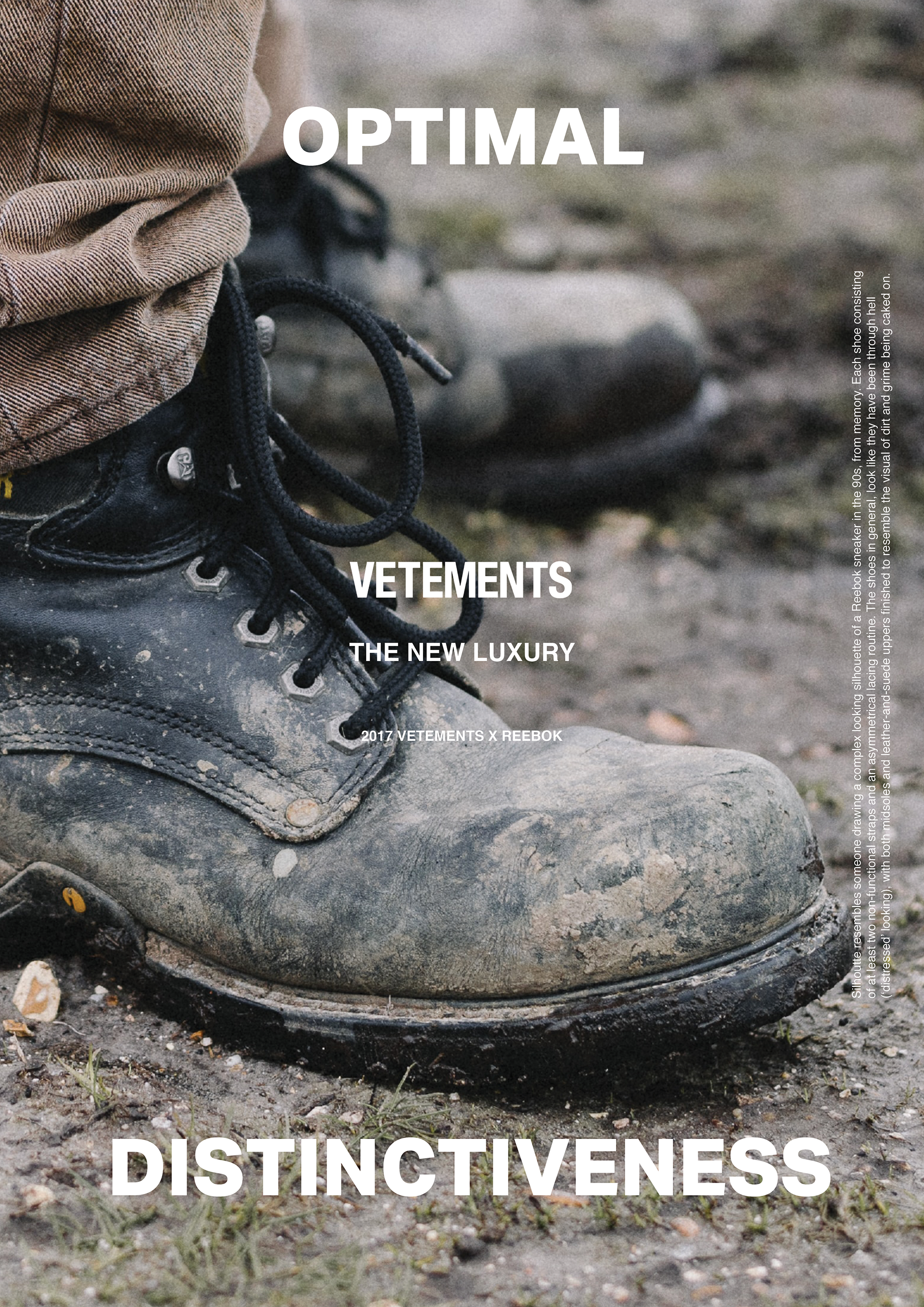
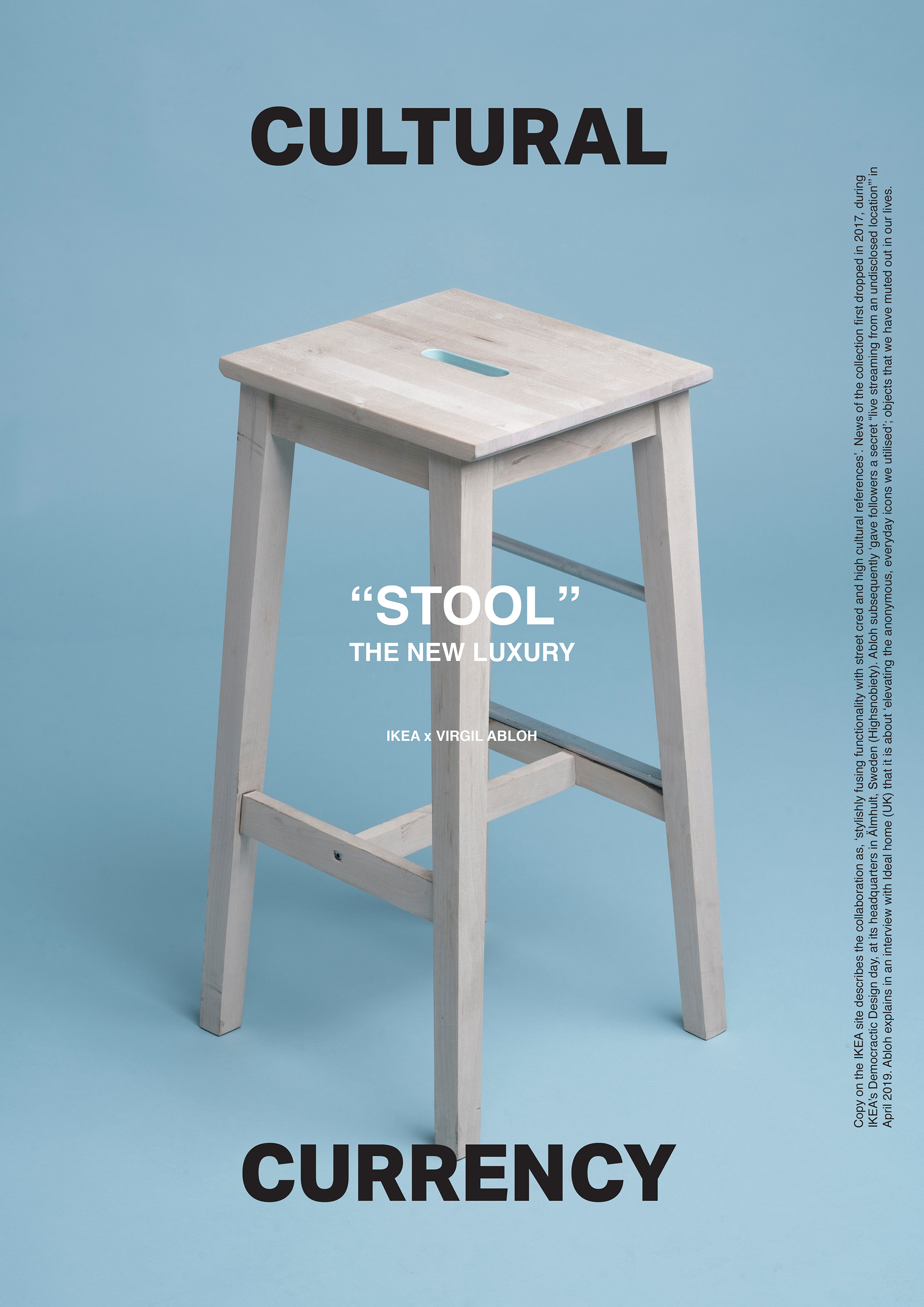
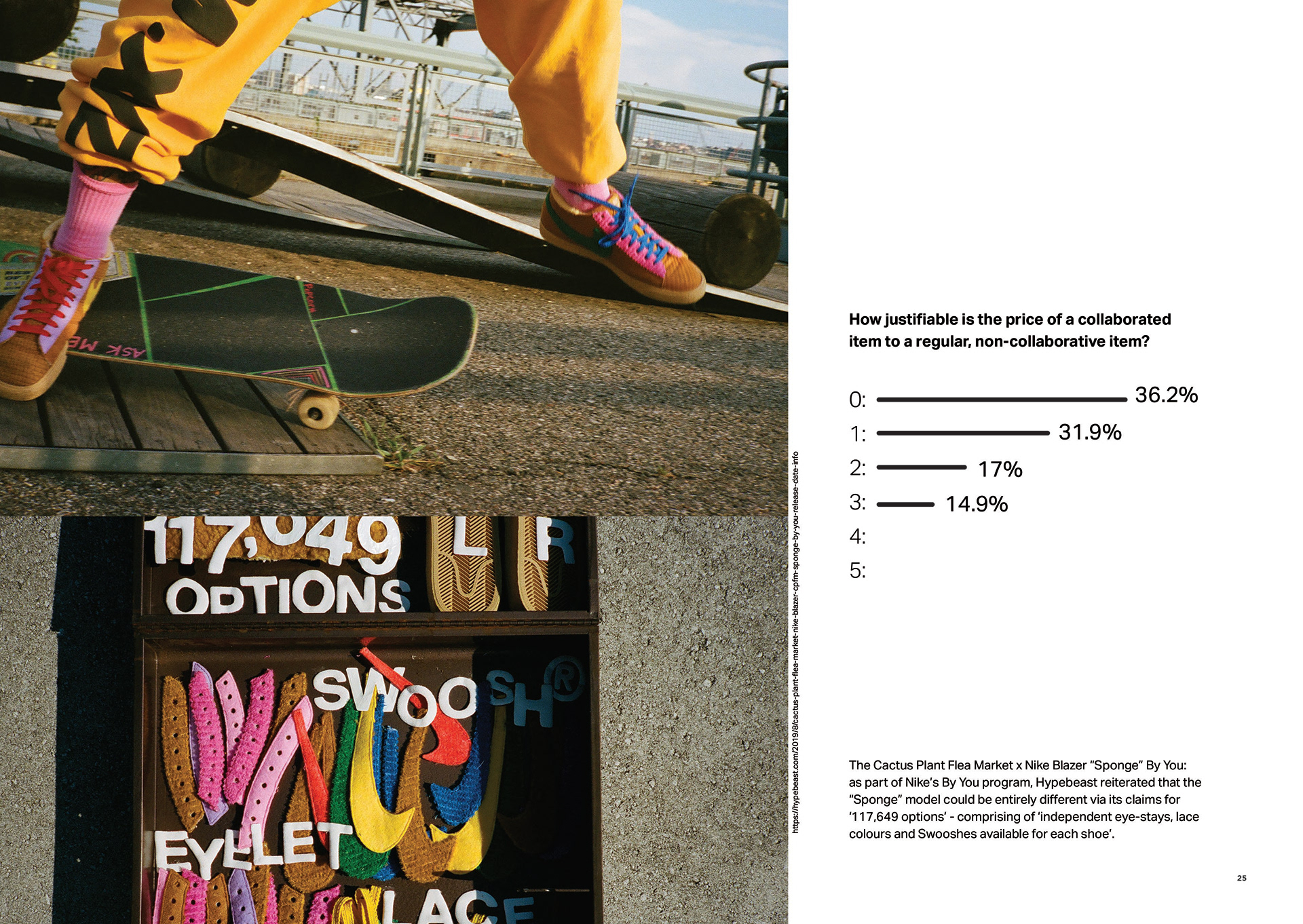
Posters generated, in response to the narrative of hype mechanisms employed by brands; the relationship by which exclusivity limits accessibility, and displaces the original pricing of say, a collaborative sneaker (to a regular sneaker of the same brand).
The specific case studies utilised were as follows:
Digital culture studio, MSCHF literally created a pair of Jesus Shoes - by injecting 60cc of holy water into one of the bubbles of an Air Max sole. The discussion lends itself to religion and the cult following brands have in consumerism through various adorning elements: a steel crucifix, the verse inscriptions of Matthew 14:25. The $3,000 sneakers were supposedly blessed by a priest and include red insoles, in reference to the red Papal shoes that were traditionally worn by Vatican leaders.
-
In his time at VETEMENTS, Demna Gvasalia has done a fair bit of disruption. With the VETEMENTS x Reebok ‘dad sneakers’, its distinctiveness lies in the ability to resemble an actual worn-out pair of sneakers through the use of ‘distressed and cracked painted leather panels’ (Highsnobiety). What’s interesting is the citing of an article on Vogue, identifying this trend of ‘dirty shoes’ as more than mere icky: having neat shoes correlates with anxiousness, conscientiousness or being absolutely dull (ew).
Perhaps the imbued message is portraying a sense of not being uptight, calm or even politically liberal. It's an alignment towards the Generation Z consumer, one that enables distinctiveness, and that tangent of “If you know, you know” - yes it’s perceived as a joke but who’s laughing at whom really?
-
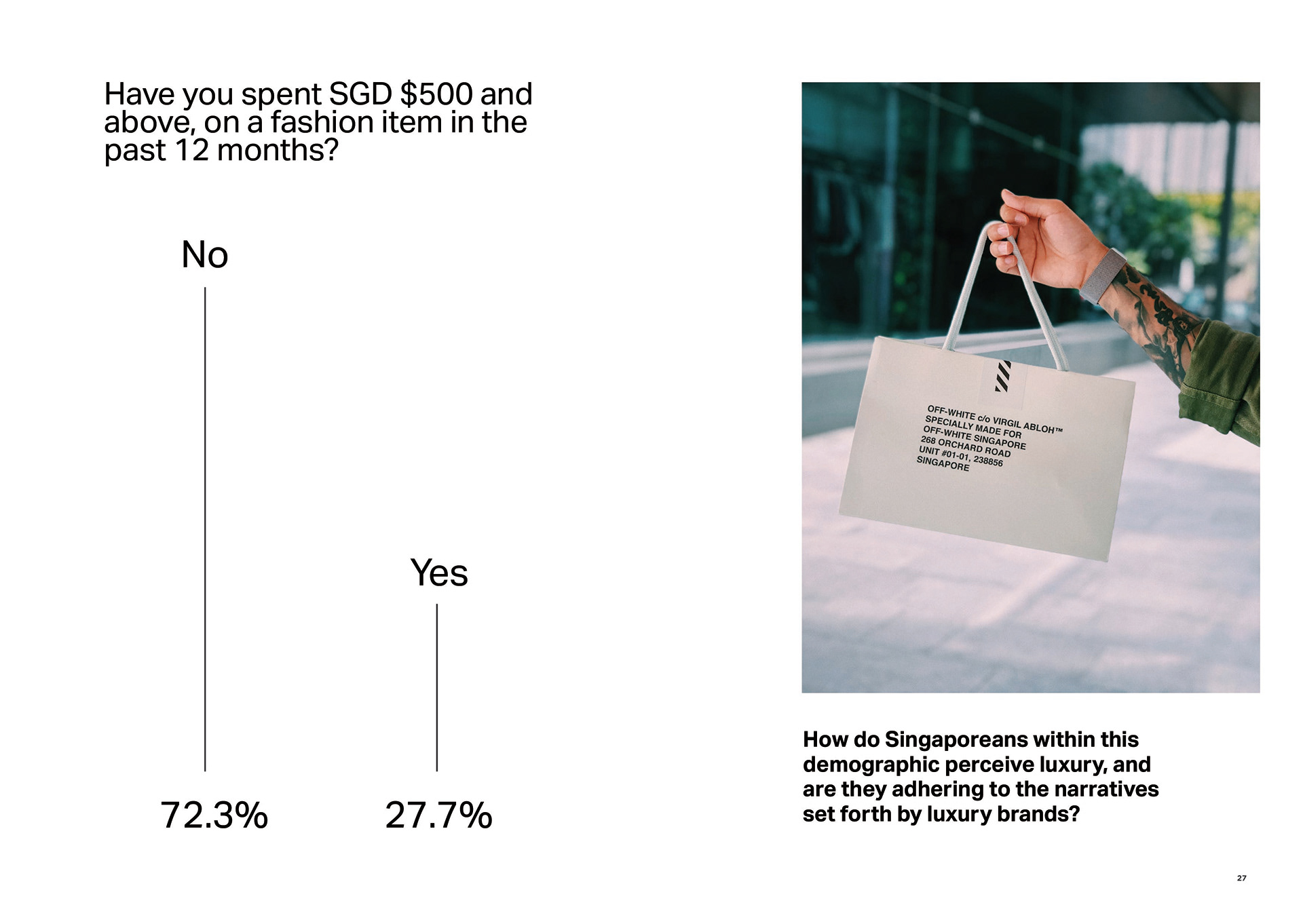
The MARKERAD collection has been hyped since 2017; news of this collection was dropped via IKEA’s Democratic Design Day in 2017 (Highsnobiety). Off-white Chief Creative Executive Virgil Abloh himself (who simultaneously Creative Director at LVMH’s Louis Vuitton’s) subsequently gave followers a secret “live streaming from an undisclosed location” earlier this year 2019. The collection, geared towards millennials procuring a new home, is mostly ‘affordable’ and attempts to ‘interrupt the everyday object’ those that remain anonymous and overlooked.
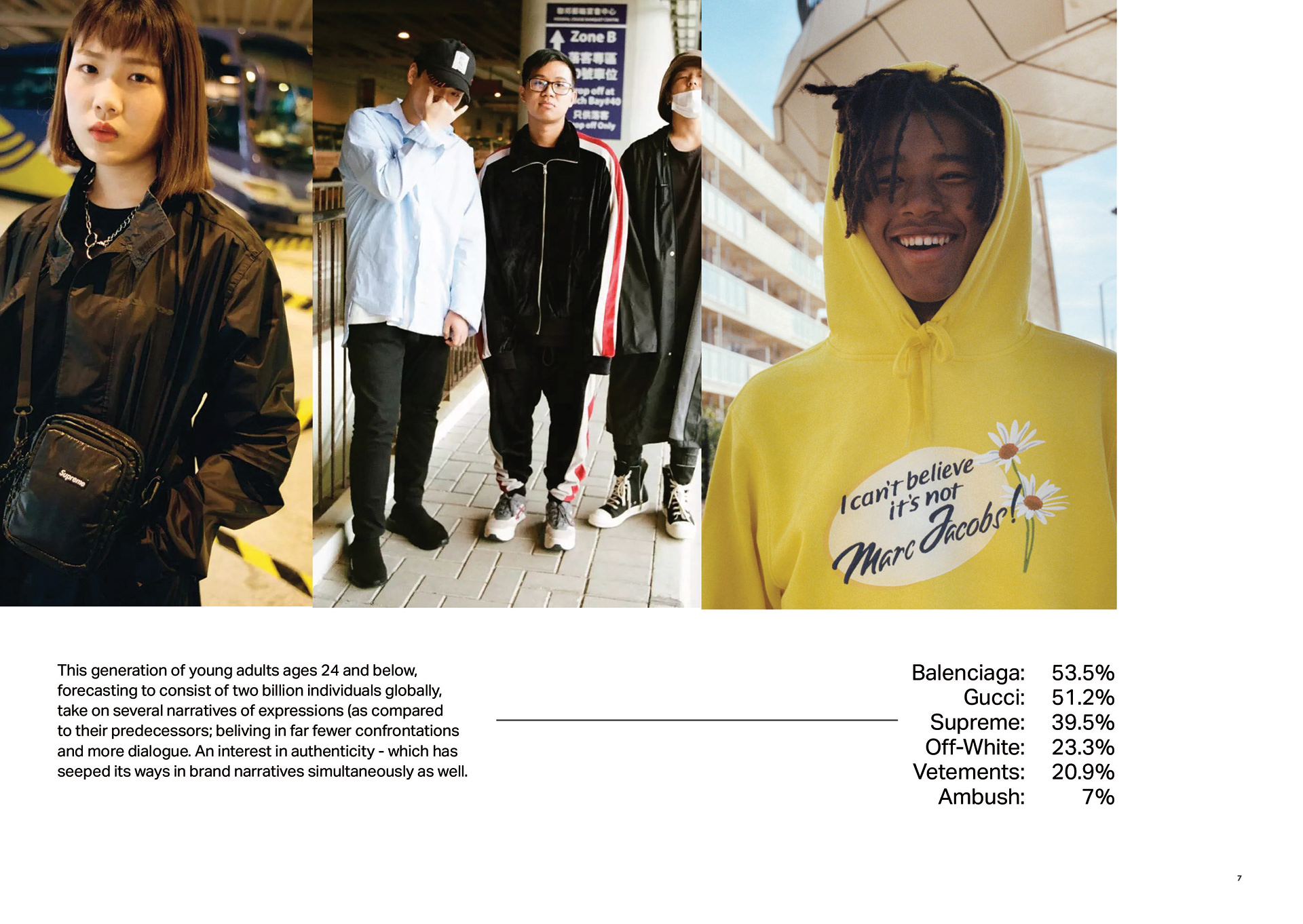
Luxury objects are utilised today to convey a variety of meanings: individuality coupled with articulating values, messages coherent to brand identity simultaneously (McKinsey, Fischer, Currid-Halkett). Based on WGSN’s white paper, attributes of the Generation Z demographic include a background of being ‘digital natives’ (Owen, et al, P5), leading lives intertwined with wanting to create positive change and driven more strongly (than their predecessors) to stay connected whilst maintaining individuality.
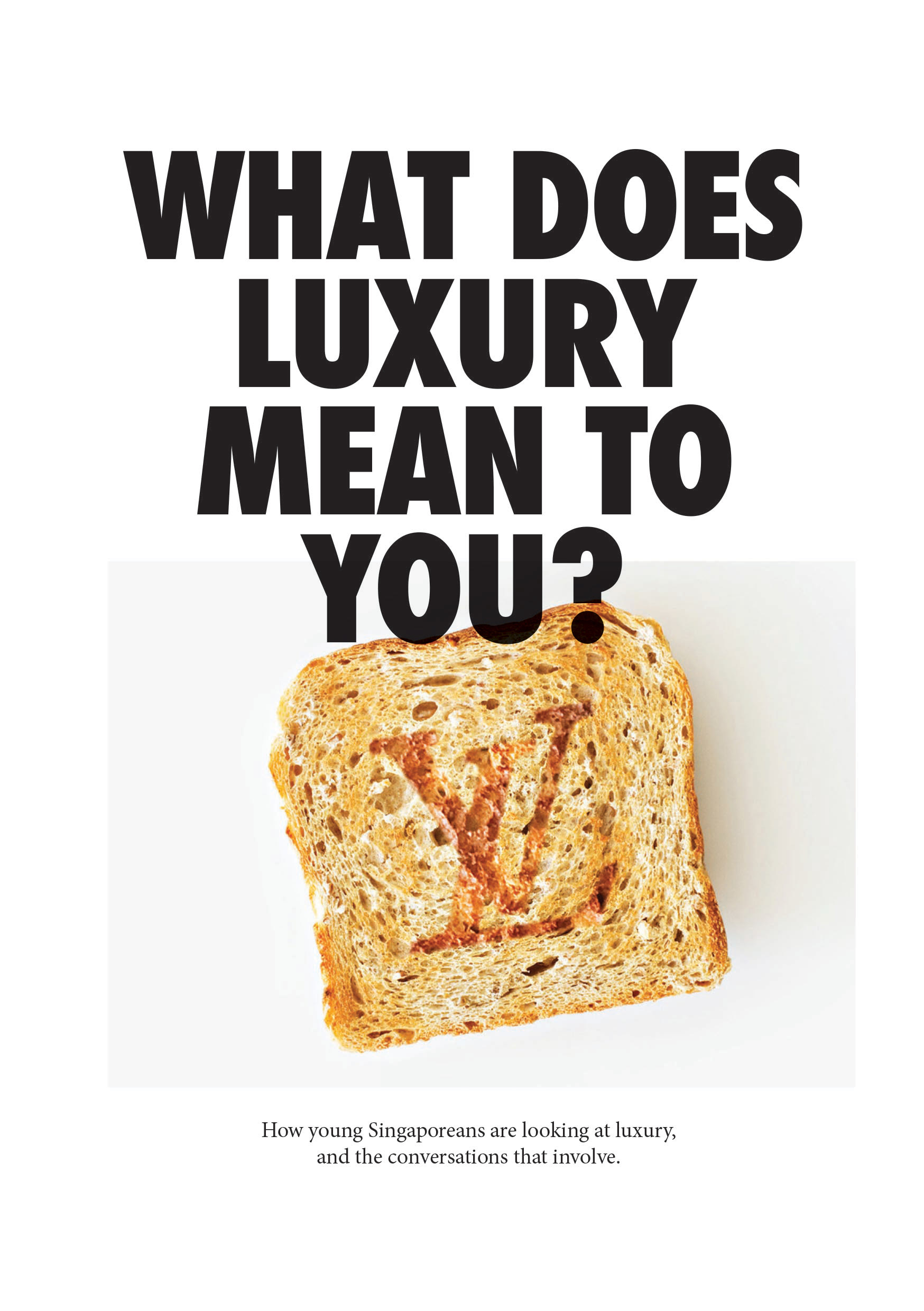
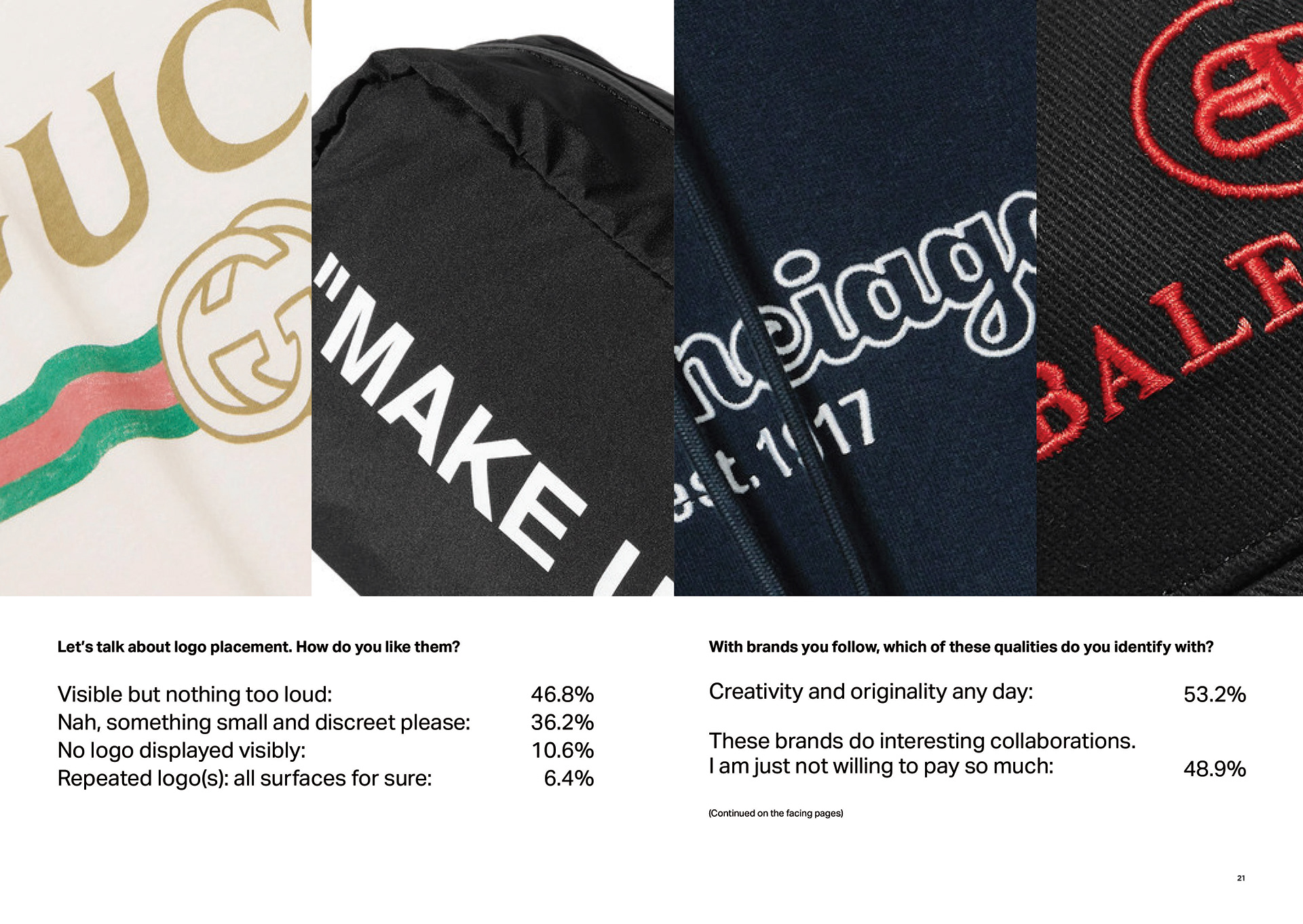
Accounting for 40 percent of global consumption by 2020 (Francis, P45), as reported by McKinsey’s report(s), the Emoji Generation’s appetite for visuals stem from their ferociously consuming visuals and embodiment of ‘visual lifestyles’ have added to the need for addressing immediacy into business models. Business of Fashion (Choufan, Cook) cites the use of luxury logos to tap into themes of nostalgia, driven forth by youths born between 1995 to 2010 (Francis, P3), looking to relive the timeframes of the 1980s to early 2000s when Logomania was spiked (Mlotek). Within the premise of Instagram, the use of bold logos serve simultaneously as visual signifiers, indicating one’s allegiance to a brand, tribe or following instantaneously; traditional store spaces symbolise experience driven marketing, while queuing for the latest exclusive drop enable the like-minded Gen Z to commune (Stephens, Owens).
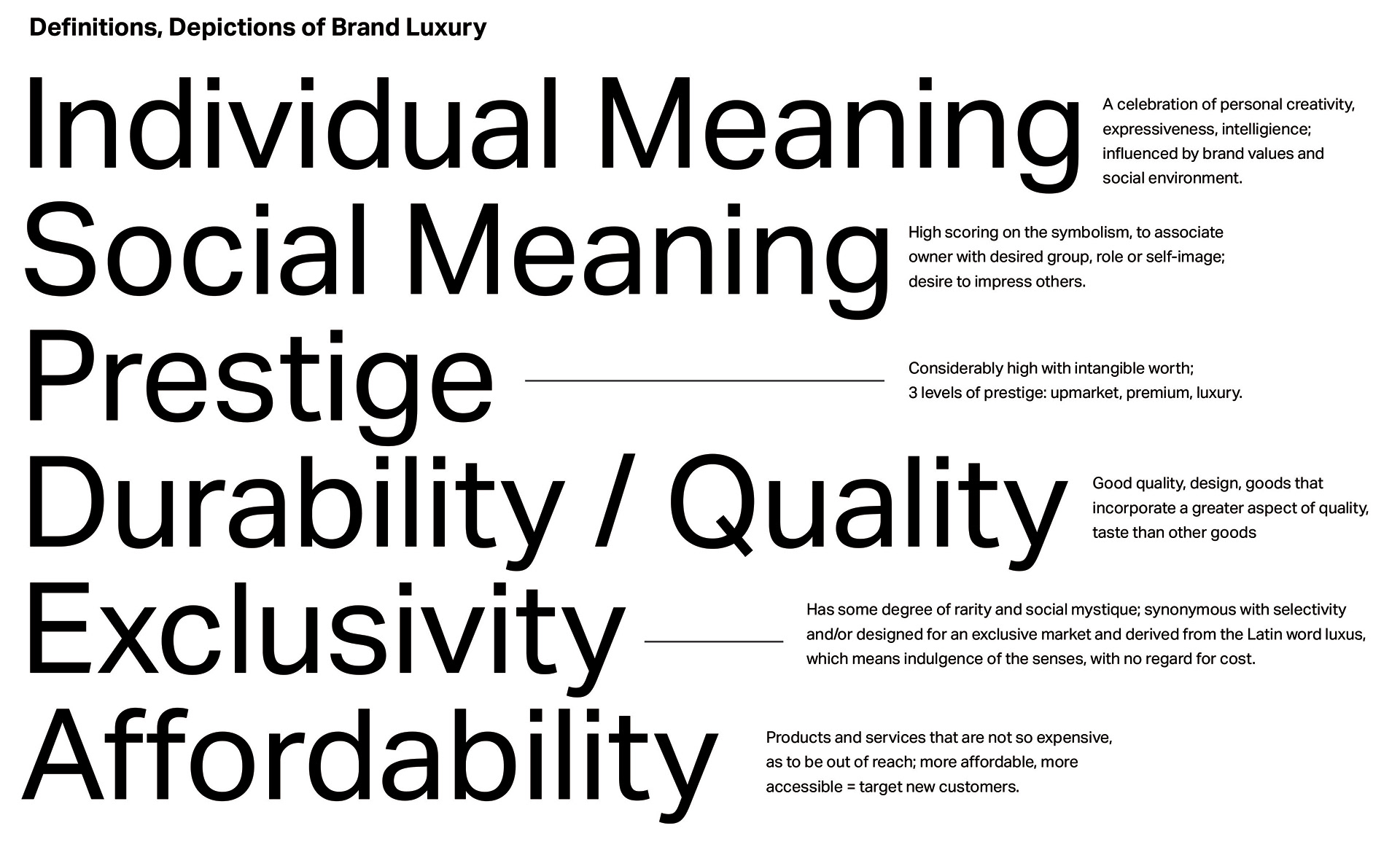
Above: Utilised framework; Miller, Karen W. and Michael K. Mills. “Probing brand luxury: A multiple lens approach.”Journal of Brand Management, Vol. 20, 41-51 (October 2011).
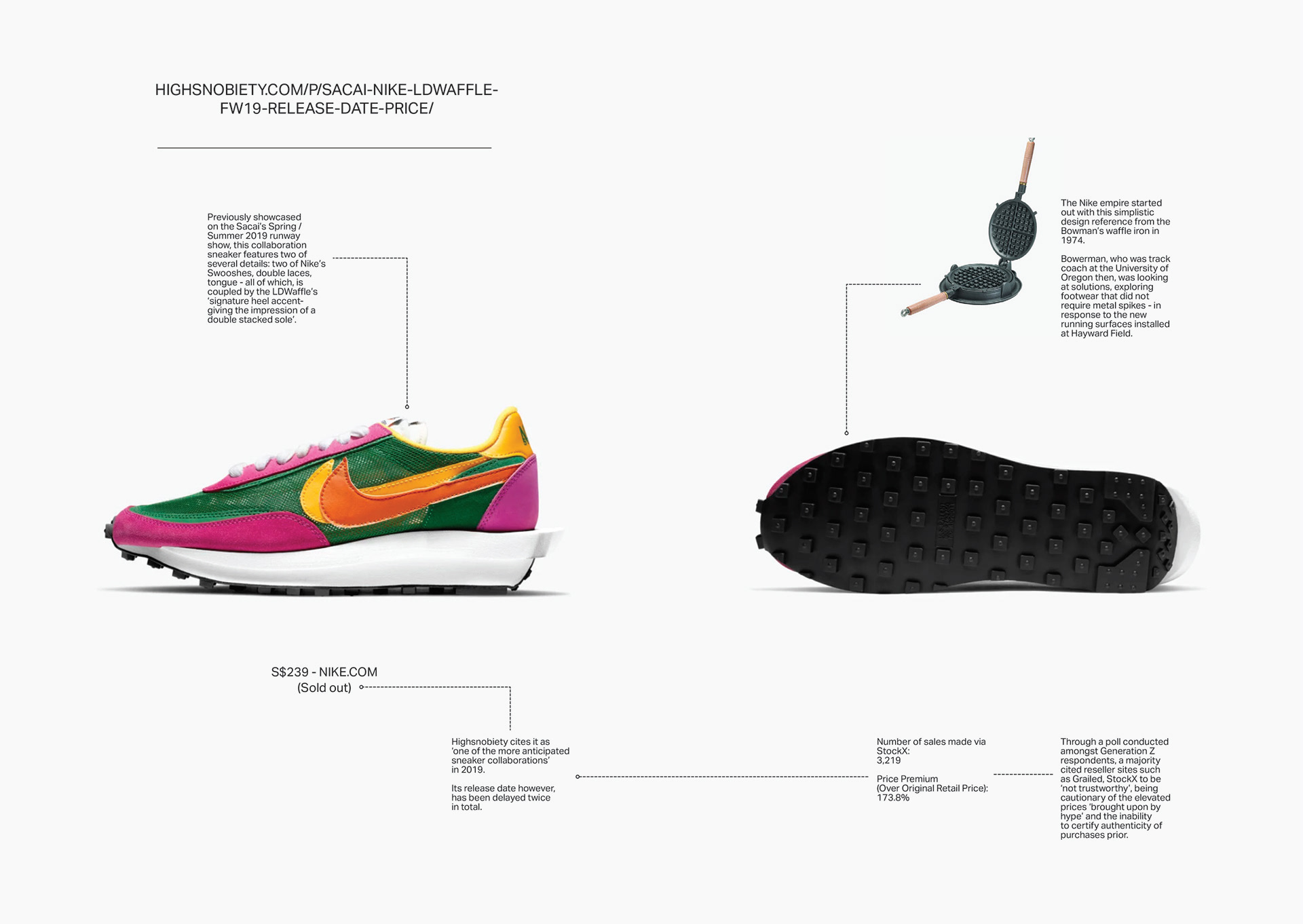
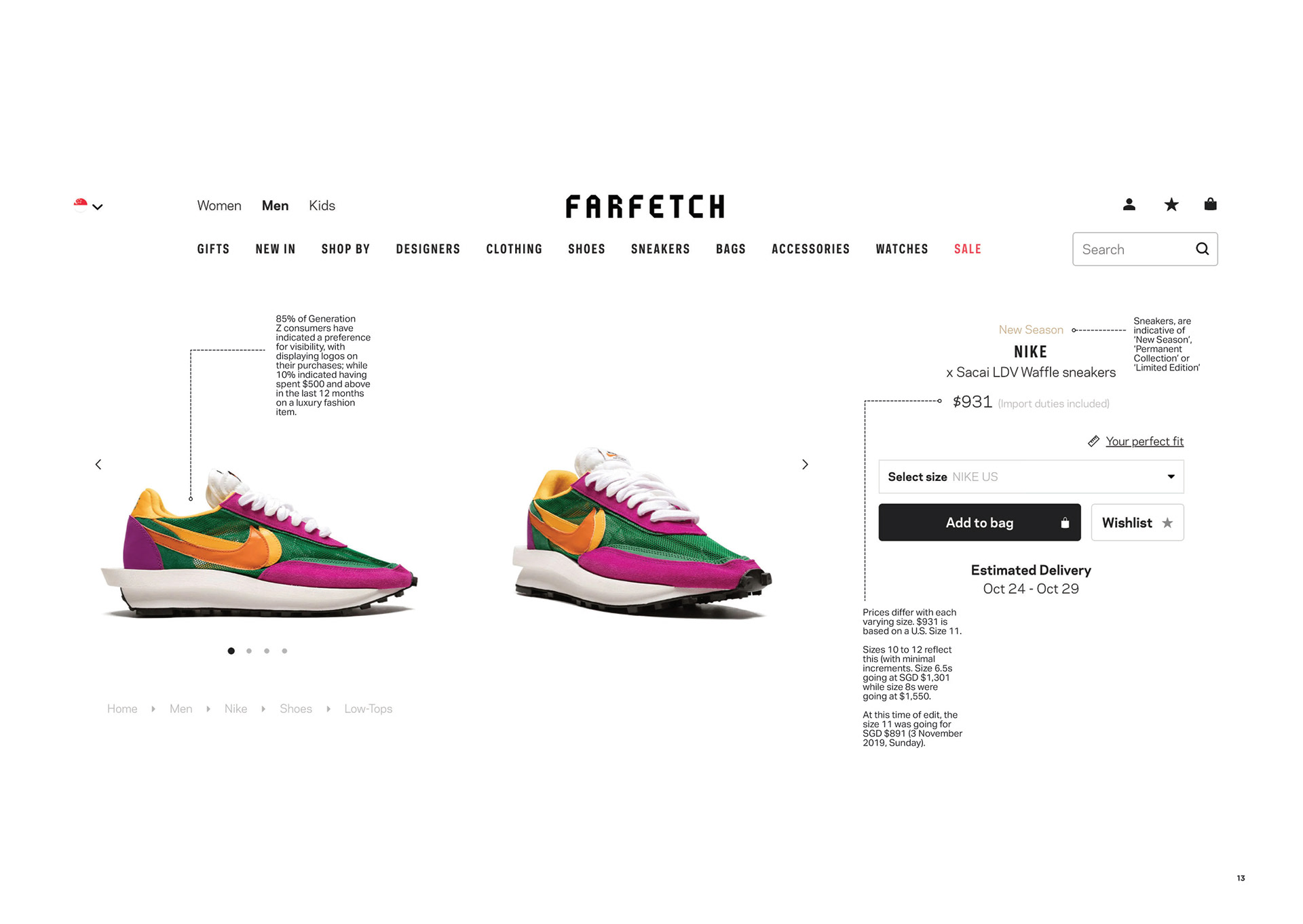
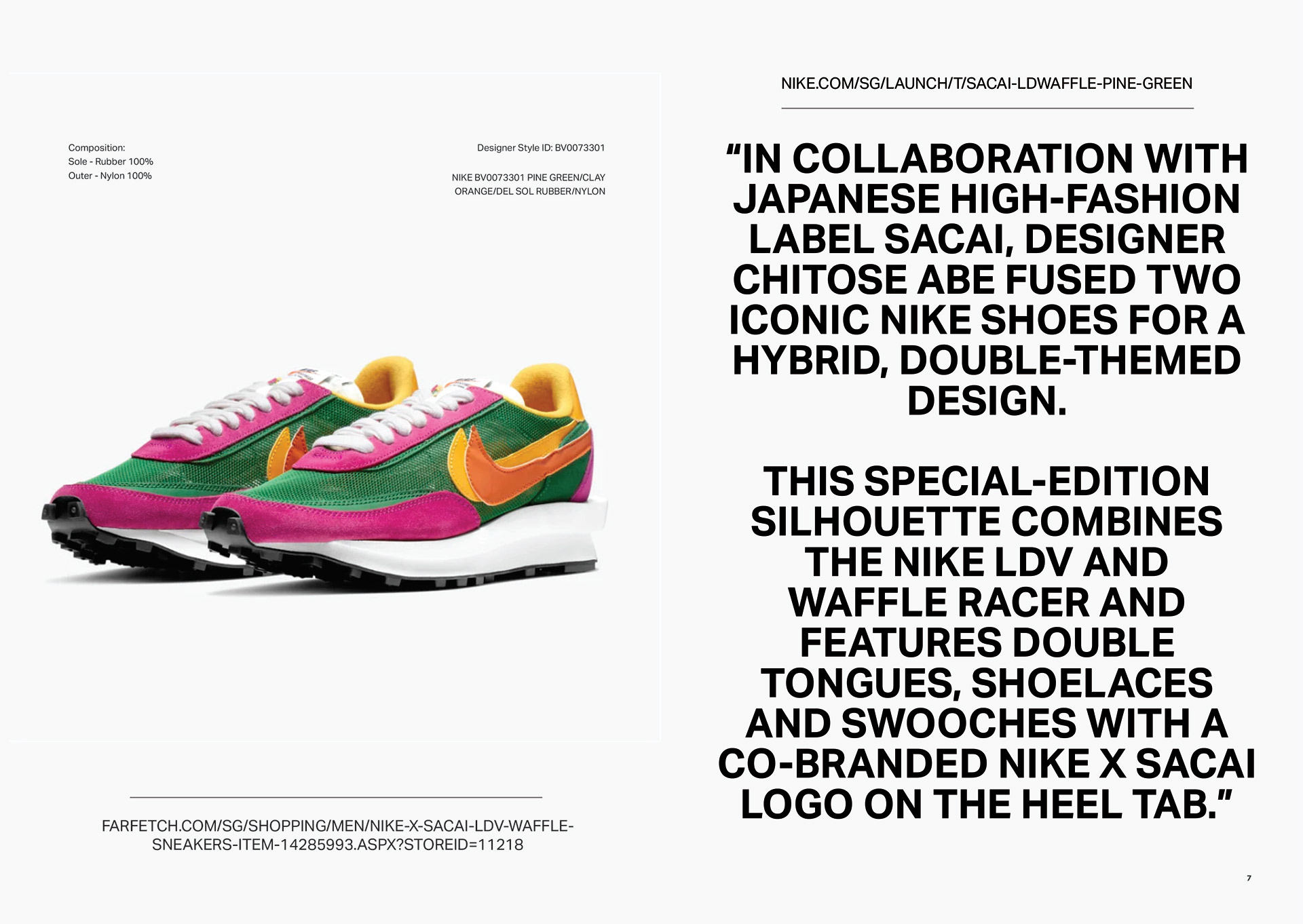
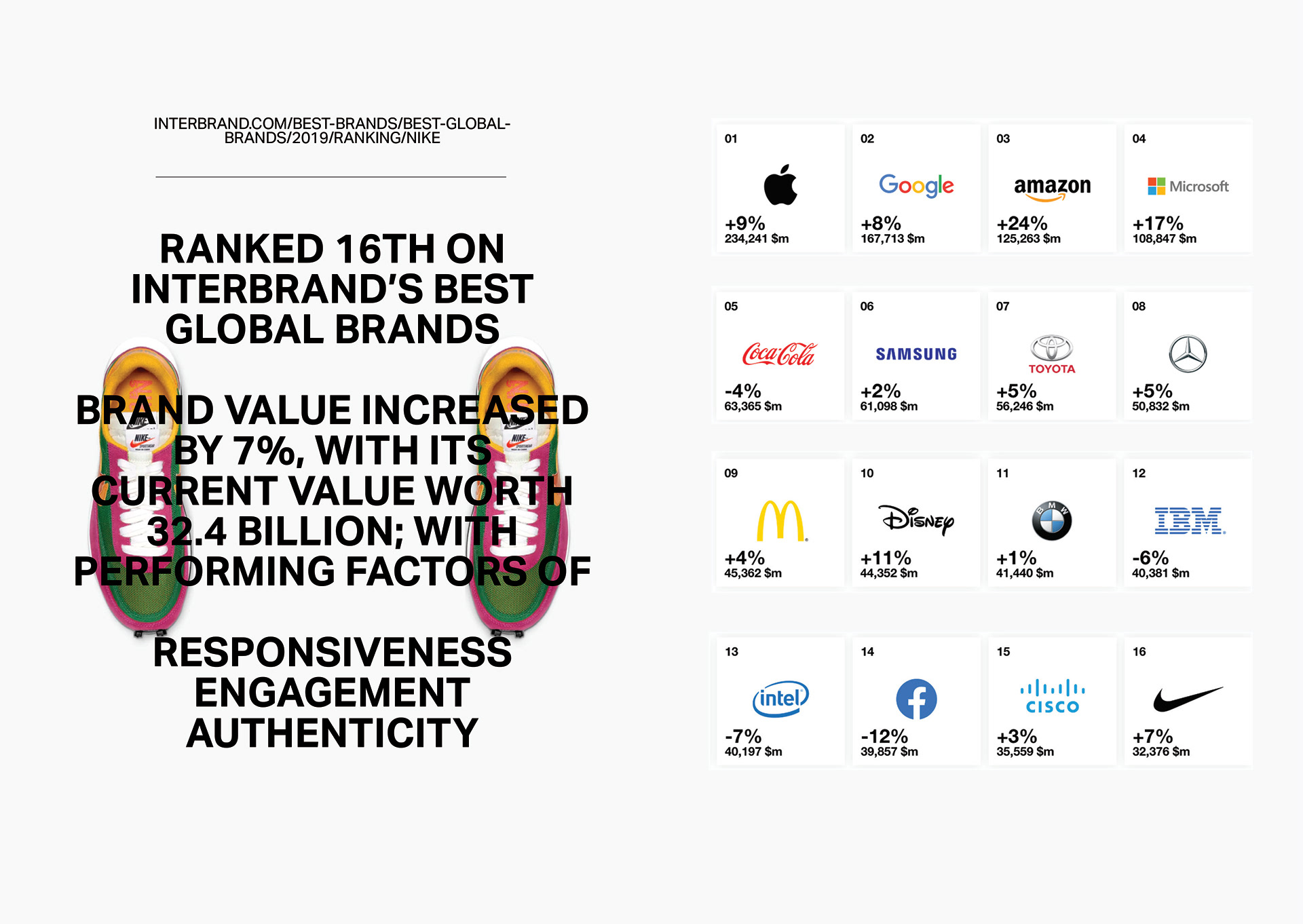
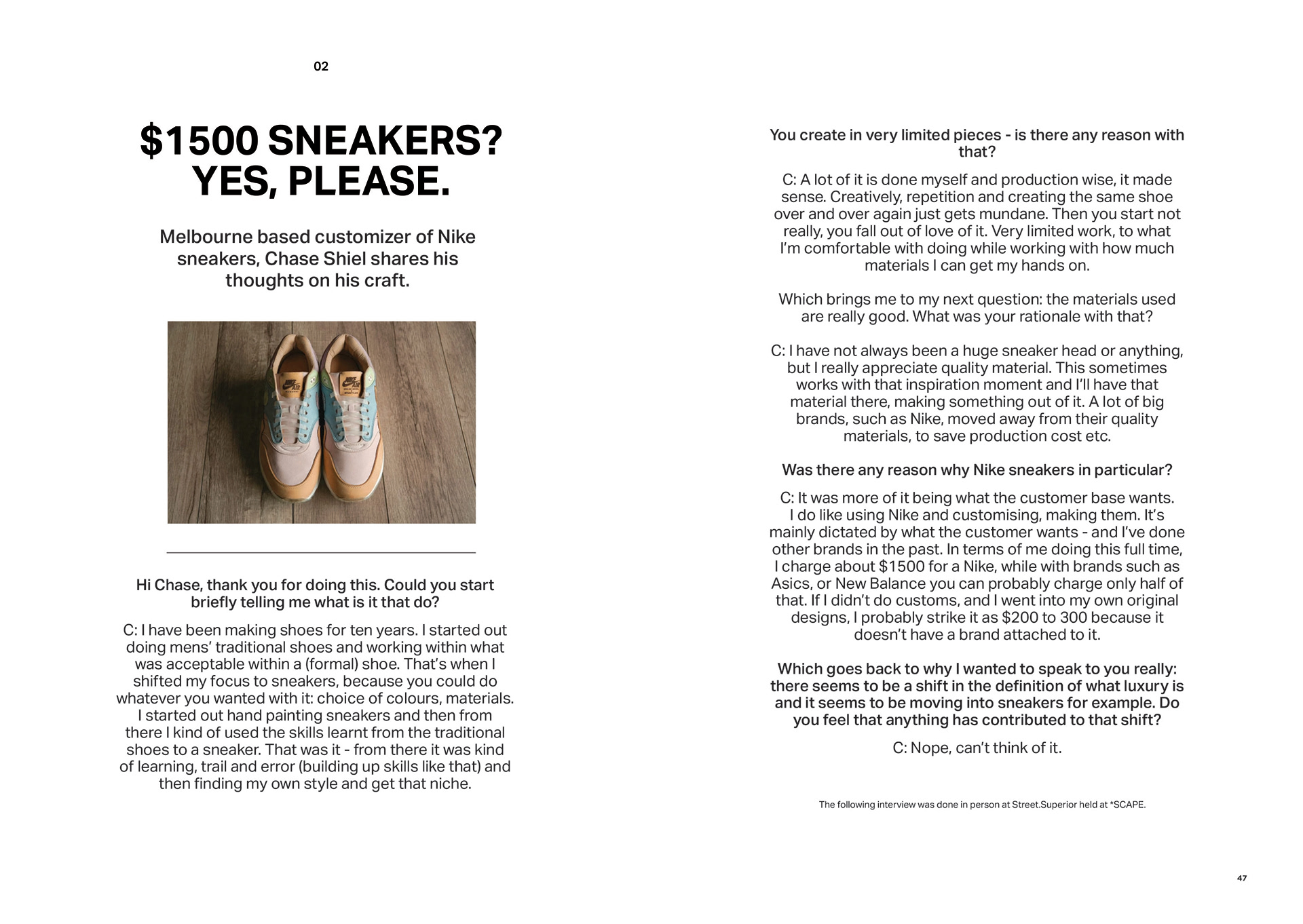
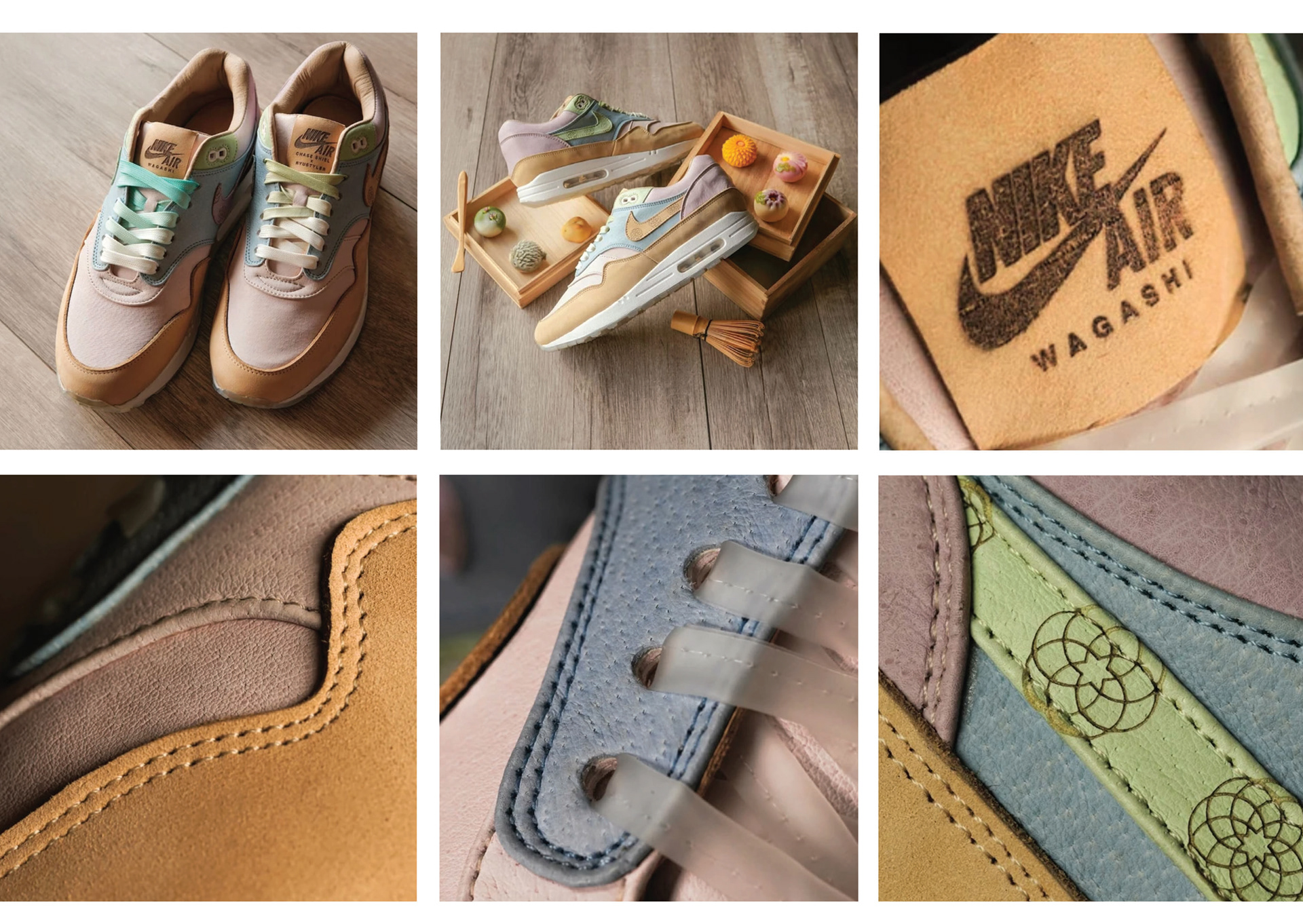
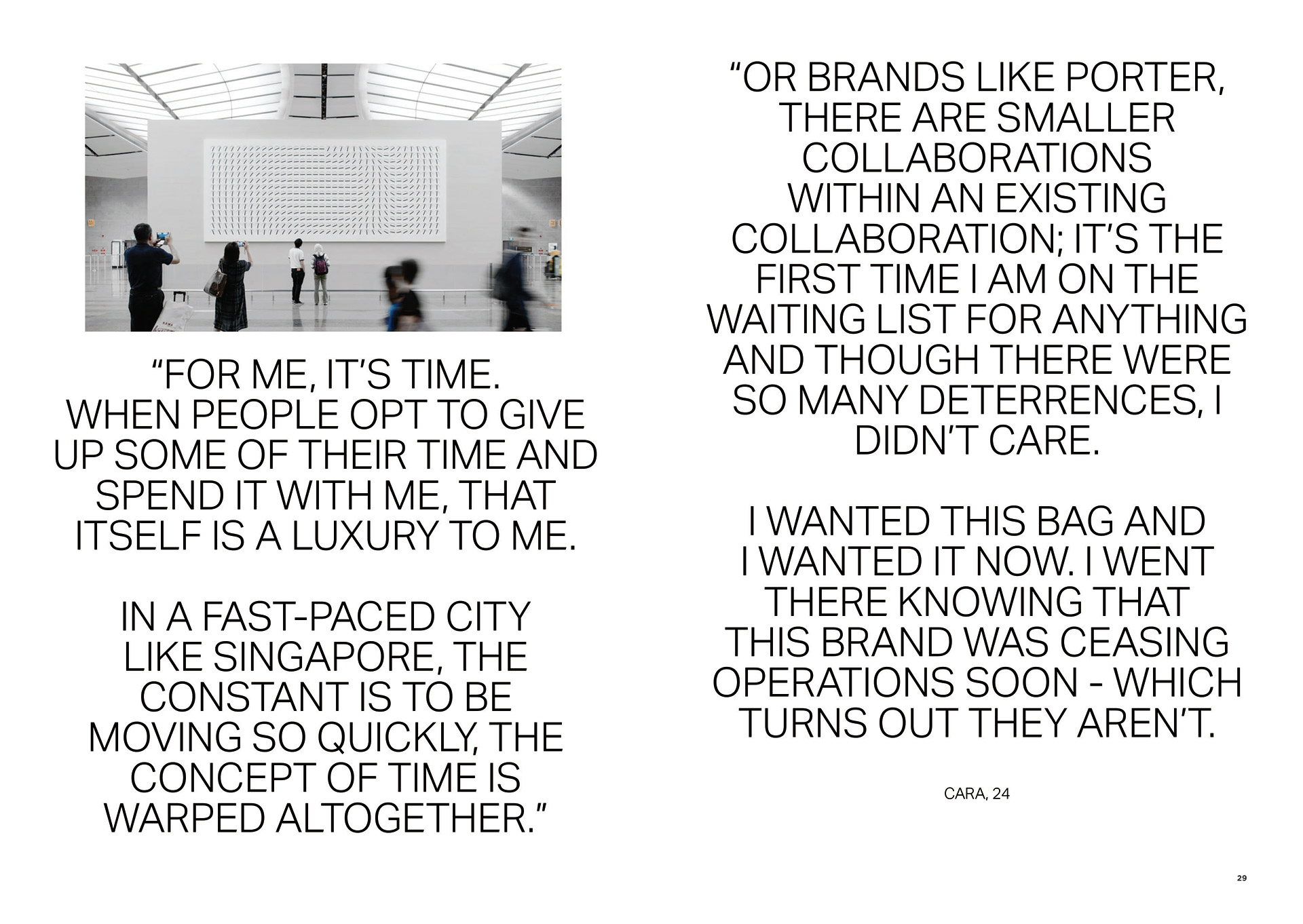
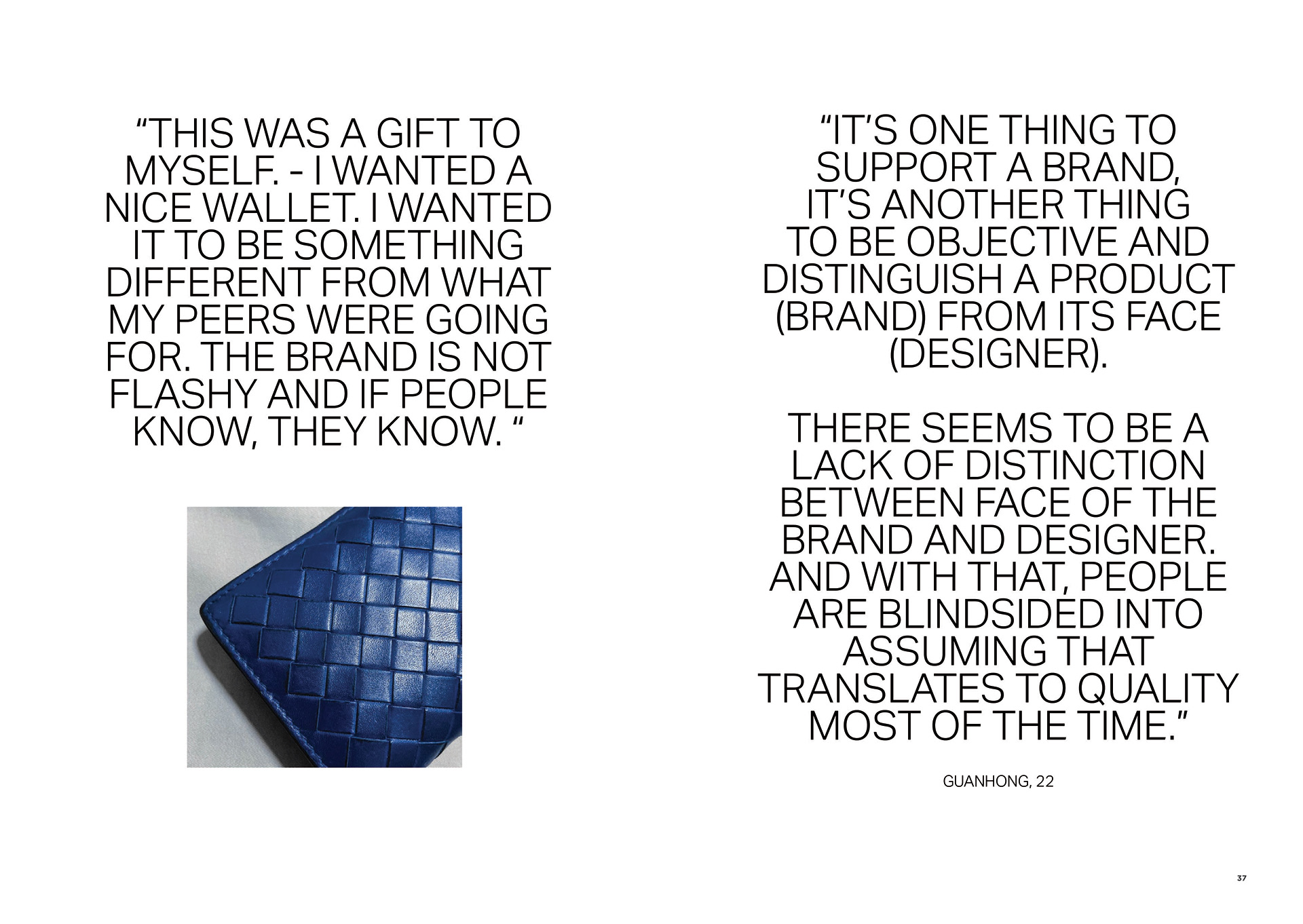
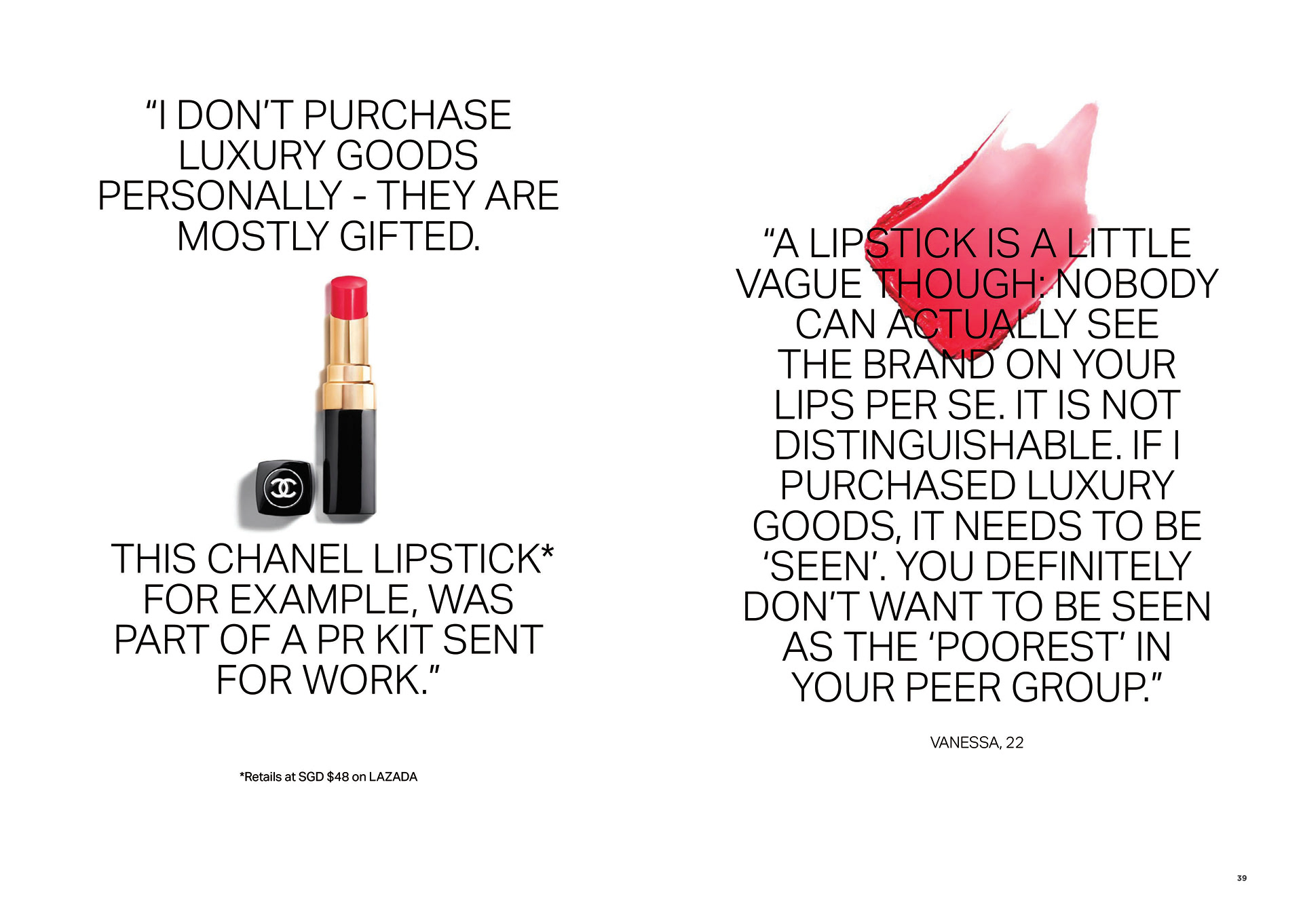
Supplementing the use of case studies, interviews gathered were utilised in the corresponding dissertation component. Transcripts include accounts with Dover Street Market Singapore, FLABSLAB, Uncle Ahns Tees, Hype Master; David Shapiro (Author of Supremacist, and contributor to media outlets such as VICE, The Cut); Pritish Bhattacharya (Researcher at the Institute of South East Asian Studies (ISEAS)); Matt Powell (Senior Industry Advisor, Sports - The NPD Group).
References:
Choufan, Liroy. ‘Logomania? Blame the Hipsters’. BOF, February 10, 2018, https://www.businessoffashion.com/articles/opinion/op-ed-logomania-blame-the-hipsters
Cook, Grace. ‘Have We Reached Peak Logo?’. Business of Fashion, December 13, 2017, https://www.businessoffashion.com/articles/intelligence/have-we-reached-peak-logo
Currid-Halkett, Elizabeth. The Sum of Small Things: A Theory of the Aspirational Class. Princeton University Press, 2017.
Fischer, David. The New Luxury. Highsnobiety, Titel Media GmbH, Berlin 2018.
Francis, Tracy and Fernanda Hoefel. ‘True Gen’: Generation Z and its implications for companies. McKinsey&Company. Global Editorial Services. 2018.
Goffman, Erving. The Presentation of Self in Everyday Life. Doubleday, 1956;
Miller, Karen W. and Michael K. Mills. “Probing brand luxury: A multiple lens approach.” Journal of Brand Management, Vol. 20, 41-51 (October 2011).
Mlotek, Haley. ‘All in the Family: Why Heritage Logos Are Back After Having Left’. SSENSE, https://www.ssense.com/en-us/editorial/fashion/all-in-the-family-why-heritage-logos-are-back-after-having-never-left.
Owen, Sarah, et al. “The Gen Z equation: a WGSN project.”
Simmel, Georg. “The Philosophy of Fashion.” The Sociology of Georg Simmel, 1950, pp. 338-344. The Free Press.
Stephens, Doug. Reengineering Retail: The Future of Selling in a Post-Digital World. Figure 1 Publishing, 2017.